


Honorary Doctorate Award
Exploring the World of “Honorary Doctorate Award”
Someone who receives an honorary doctorate and the respect that goes along with it might be curious about what exactly it means. An academic degree is an honorary doctorate. A person who has excelled in their field of study but does not meet all of the standard standards for receiving that particular degree gives special honors. Actually, it’s for someone who has made extraordinarily meritorious contributions to a field or their community despite not having a PhD.
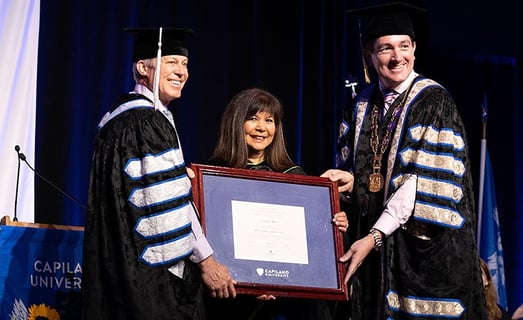
What is an Honorary Doctorate Award?
An honorary doctorate award is an academic honor bestowed upon distinguished individuals without the need for enrollment in a college or university. Colleges and universities often award these degrees to individuals who have made significant impacts through lifetime service, dedication to societal betterment, or notable success in a particular field or industry. Honorary doctorates, such as an honorary degree in education or an honorary master’s degree, are presented as diplomas.
How Useful is an Honorary Doctorate Award?
While an honorary degree does not confer any special professional rights, it enhances one’s prominence and recognition. Recipients can enjoy the following benefits:
Recognition: Official acknowledgment as a person of great honor.
Title Use: The ability to use the title “Doctor” after your name.
Resume Enhancement: Inclusion of the honorary degree in the “Achievements and Awards” section of your resume.
Why Do Colleges Award Honorary Degrees?
Colleges and universities award honorary degrees for various reasons, including:
Gratitude: To appreciate significant financial contributions from alumni or benefactors.
Recognition: To honor individuals who have positively influenced the institution or community.
School Pride: To acknowledge graduates who have made noteworthy contributions post-graduation.
How Does One Become an Honorary Degree Recipient?
The criteria for awarding honorary degrees vary by institution. However, common factors include significant societal contributions. Some institutions may have specific policies or limitations, such as avoiding awards to individuals with political or financial ties to the school.
Honorary doctorates can be awarded in numerous fields, such as:
Science
Education
Law
Medicine
Philanthropy
Public Service
Types of Honorary Doctorate Awards
Honorary degrees are typically awarded to recognize achievements in specific industries and do not require research or coursework. Types of honorary degrees include:
Doctorate: For significant contributions to a field of study.
Doctor of Laws (LLD): For excellence in law, politics, commerce, or government.
Doctor of Education (EdD): For significant contributions to education.
Doctor of Letters (DLitt), Doctor of Arts (DA), Doctor of Philosophy (DP), Doctor of Music (DMus), Doctor of Science (DSci): For contributions to research and study.
Honorary Master’s Degree (MA, MSc): For work in humanities, social sciences, or other relevant fields.
Eligibility Criteria
To be eligible for an honorary doctorate, a nominee typically must:
Inspire and enable others through cooperation, trust, human dignity, and appreciation.
Set high performance standards and serve as a role model.
Make fair, open decisions and take calculated risks.
Demonstrate excellence in service delivery through measurable results.
Show exceptional devotion to their work while upholding public service principles.
Act as an inspirational role model for others.
Benefits of Honorary Degree Awards
Recipients of honorary degrees may receive:
A certificate from the awarding institution.
A 5-minute interview broadcast on partner media platforms.
Participation in a leadership seminar presented by international educators.
Networking opportunities with successful business people.
An honorary doctorate is one of the most prestigious academic honors. While not everyone can achieve the goal of becoming a doctor through traditional educational paths, honorary degrees provide an alternative way to gain such recognition. These honors celebrate individuals' significant contributions to society and allow them to enjoy the prestige of being recognized as doctors. If you aspire to such recognition, consider exploring honorary doctorate programs to celebrate your achievements.
Empowering Excellence, Enriching Futures!
At the Honorary Degree Award, we believe in recognizing brilliance and empowering individuals to reach new heights of success. As participants of this esteemed program, you will enjoy a plethora of benefits designed to enhance your journey of excellence and propel you towards a future filled with endless possibilities.
1. Lifetime Membership to Prerna Society of Technical Education and Research: Join a community of visionaries, innovators, and thought leaders. As a lifetime member of Prerna Society of Technical Education and Research, you'll gain access to exclusive events, networking opportunities and resources that will enrich your professional journey and foster collaborations with like-minded individuals
2. Exclusive Merchandise: Wear your achievements with pride! Participants of the Honorary Degree Award program will receive a specially curated collection of exclusive merchandise, including a bespoke bag, a meticulously crafted certificate of recognition, an elegant gown, and a prestigious degree tangible symbols of your dedication, perseverance, and outstanding contributions to your field.
Elevate Your Legacy, Embrace Your Potential! With these unparalleled benefits, the Honorary Degree Award not only celebrates your past achievements but also paves the way for a future filled with limitless opportunities and boundless success. Join us as we embark on a journey of excellence, innovation, and inspiration together, let's redefine what's possible and leave a legacy that will inspire generations to come
Contacts
+918950548895
info@awards.in